
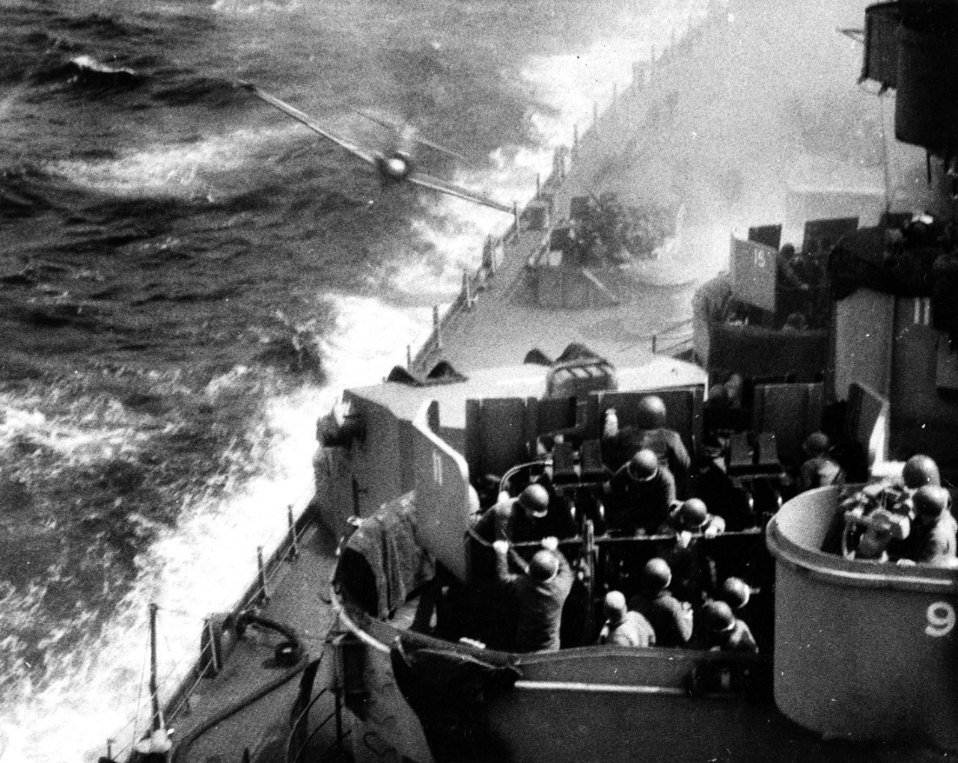
Japanese "Zeke" strikes USS Missouri on April 11, 1945, during the Battle of Okinawa. US Navy photograph NH62696 in the National Archives.
There are dents on the starboard side hull, stern quarter of the Battleship Missouri, now a historic memorial ship moored along Ford Island's "Battleship Row" in Pearl Harbor.
The dents are remnants of a Kamikaze attack that occurred during the Battle of Okinawa on 11 April 1945.
The Battle of Okinawa was the last major battle of World War II. The casualty and death toll was tragic and staggering. Allied victory would provide the proximity to Japan's home islands from which to launch the Allies' final land assault.
In the end, that final assault never occurred.
On August 15, 1945, following the incomprehensible devastation of Hiroshima and Nagasaki, Emperor Hirohito addressed the people of Japan via a recorded message on radio, asking them to "bear the unbearable and endure the unendurable".
Two weeks later, on September 2, 1945, "representatives of the major warring powers" gathered on the starboard veranda deck of USS Missouri in Tokyo Bay to formally sign the Instrument of Surrender.
With words of hope and reconciliation, the long, terrible years of world war were finally over.
For all those who lived through those wartime years day by day, its impact was inescapable and life-long.
One of those day-to-days was April 11, 1945.
In Germany it was the day that soldiers from the XX Corps of General Patton's Third Army liberated the survivors of Buchenwald Concentration Camp.
In the Pacific, the Battle of Okinawa was underway.
The following excerpt from the Action Report of Commander Task Group 58.4 provides a glimpse of the activities on that day.
NOTE: A Task Group is part of a larger Task Force. Both are protective cruising formations of battleships, cruisers and destroyers that surrounds and protects aircraft carriers at center of the formation from air, surface and submarine attack.
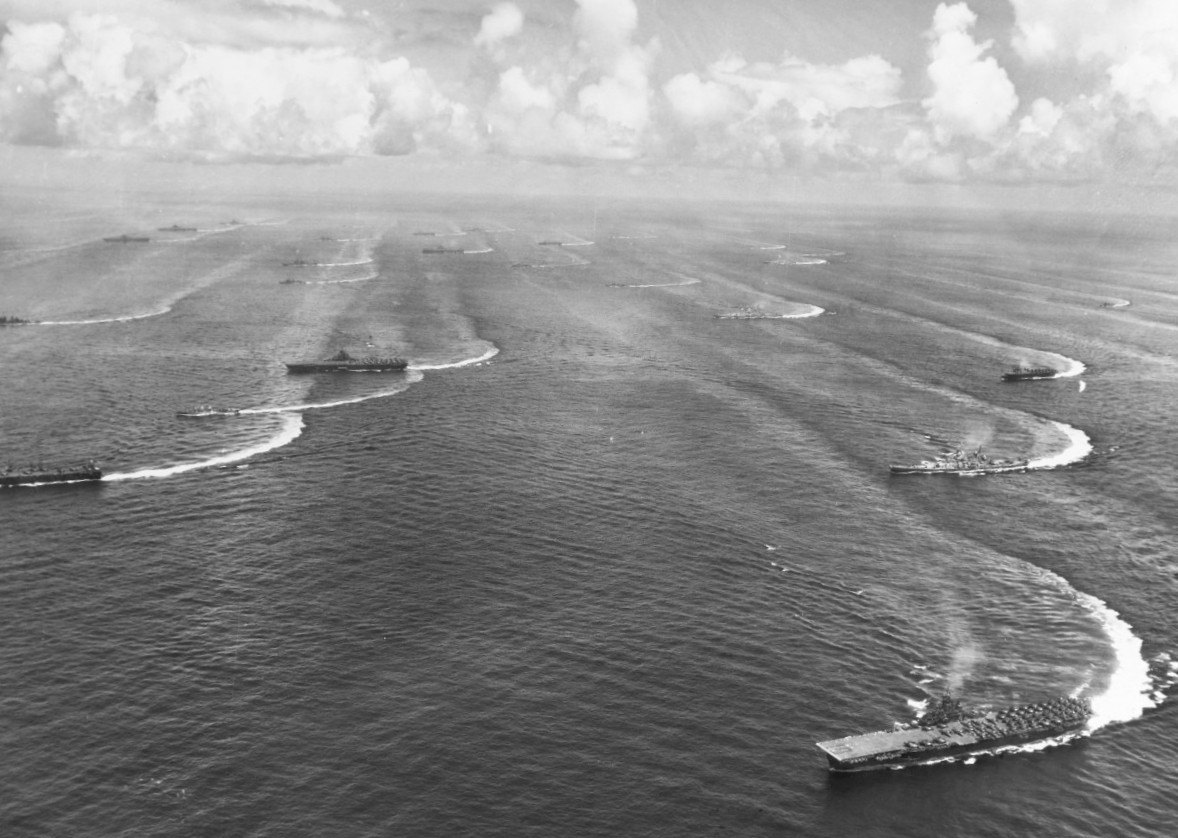
11 April 1945
Scheduled air operations were combat air patrols [CAP] over the task groups and picket line and patrols over Okinawa and Kikai, plus fighter sweeps over Kikai and Amami [islands of the Amami Group between Kyushu and Okinawa]. Some unscheduled operations in the way of additional CAP around 2000. The first Japanese plane of the day was picked up about 1100, and after closing to 7 miles it turned away and was finally shot down by the CAP about 50 miles north of the force. Several planes were taken under fire during the afternoon, two were splashed, one of which crashed the MISSOURI but only scraped the ship's side doing no damage except scorched paint and injuring none.
Were it not for a single dramatic photograph, and the few descriptive words in official After-Action Reports and ship's Deck Logs, that "crash" against the armored hull of battleship Missouri might have been overlooked and forgotten but for the occasional quiet remembrances of the Missouri crew who experienced the wartime first hand.
Among those who experienced the war first hand was Harold "Buster" Campbell. He was born and raised in Baltimore and worked for Schreiber Brothers Market while learning sign-painting before the war. After joining the navy, he was assigned to the battleship Missouri's as a ship's baker.
Another was Setsuo Ishino, born and raised in Okayama Prefecture on the Japanese island of Honshu, who worked for the railroad alongside his older brother before they both joined up and went off to fight.
And Edwin Kawahara, Honolulu born and raised, who was already in uniform and assigned to Schofield Barracks when he looked up to see Japanese aircraft flying overhead toward Pearl Harbor.
Pasquale "Pat" Ferrigno, from The Bronx in New York City, worked for Moss Photo Service before the war, before enlisting in the Navy after the December 7, 1941 attack.
Kensuke Sato joined the Imperial Japanese Navy in part to have regular meals and a pair of shoes to wear.
Tadafumi Sugiyama was in grade school when he was drafted to work in a Mitsubishi aircraft factory. During Allied air raids, he manned an anti-aircraft gun.
And Leonard "Lennie" Schmidt of Albany, New York, who joined "Pat" Ferrigno aboard Missouri as ship's photographers.
It was shortly after noon on 11 April 1945 at Kagoshima's Kanoya Airfield, when pilots of the 5th Kenmu Squadron climbed into the cockpits of their single-engine Mitsubishi Zero A6M5 fighters. Moments later props begin to slowly turn as radial engines coughed to life amid clouds of white exhaust smoke. After settling down to their distinctive, familiar rumbling roar, the pilots gave the thumbs up to their ground crews as wheel chocks were removed and 16 aircraft taxied toward the runways, throttled up, raced down the line, lifted off and headed south toward the American fleet and the Battle of Okinawa.
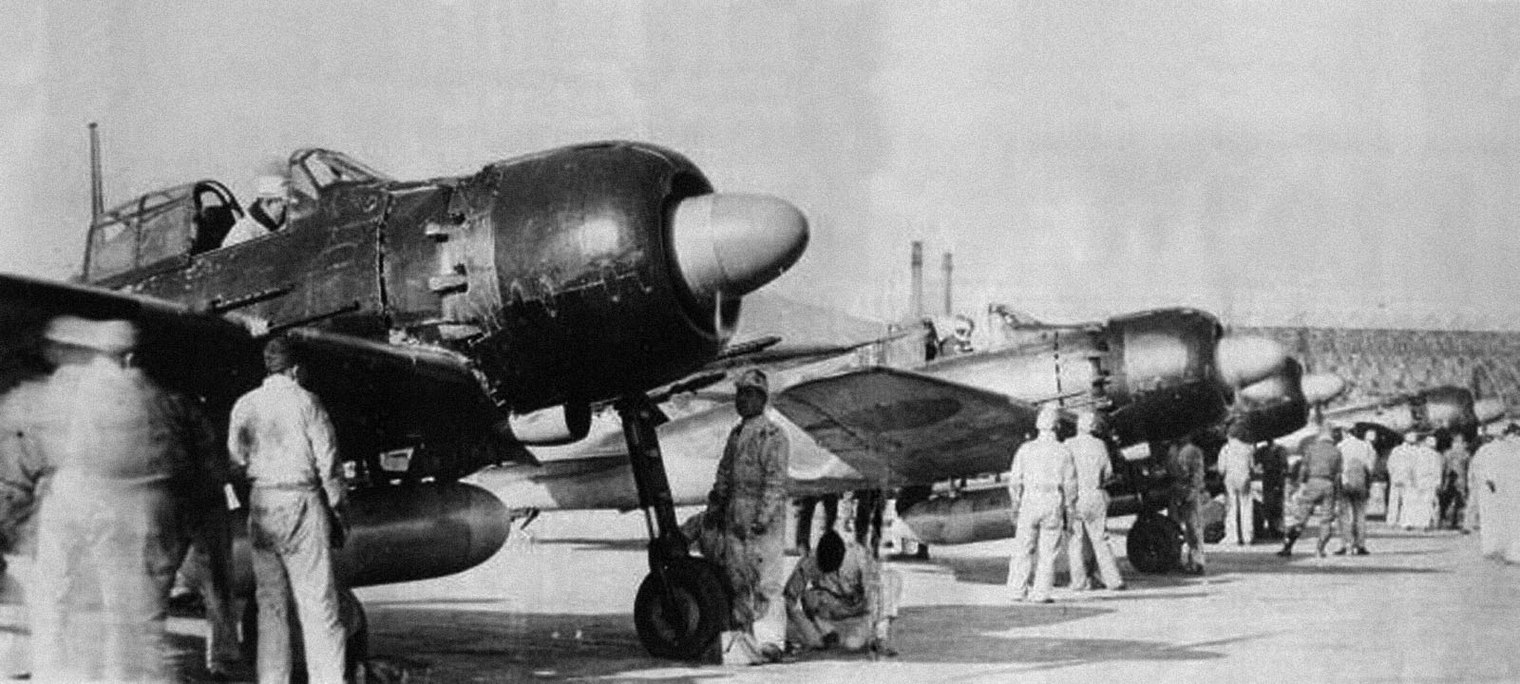
Passing Kikai island at about 1300, the pilots fanned out their aircraft to better locate the American fleet to the south. They were soon picked up by radar from the ships of Task Group 58.4. Among those aircraft, two, piloted by Flight Petty Officers 2nd class Setsuo Ishino and Kenkichi Ishii, set their course farthest to the southeast, continuing until they reached a position that allowed them to approach the Task Group from behind.
At 1439 pilot Setsuo Ishino radio telegraphed to base that he had sighted the fleet. Then again at 1441 he radioed that he had sighted aircraft. That was his last communication.
Moments later, according to Missouri's Deck Log, at 1443, Missouri was struck by a low-flying "Zeke" against the starboard stern quarter hull.

There were no radio transmissions received from his fellow pilot, Flight Petty Officer 2nd class Ishii before 1449, when Task Group reports documented the second aircraft downed by anti-aircraft fire.
(Note: according to Campbell's war diary, excerpt below, the first of the pair of aircraft was shot down while the second one proceeded inbound toward Missouri)
Learning that it was standard procedure for Special Attack Force pilots to transmit a radio telegraph message after they sighted their targets and were preparing to attack, members of Battleship Missouri Memorial's Historic Research Committee concluded that the radio transmissions received from Ishino shortly before the aircraft struck Missouri, as well as the lack of messages from Ishii, provided clear evidence that it was Ishino who piloted the aircraft that crashed Missouri.
Other independent researchers and authors have concluded in the years since that the proximity of both aircraft, and the absence of communications from Ishii leaves open the possibility that it could have been either of those pilots that struck Missouri.
That event might have been forgotten, lost among all the other tragic events of wartime had it not been for a photographer who was positioned in the right place at the right instant, who bore witness to the pilot's last determined breath amid the courageous, unrelenting defense by Missouri's gunners, in a dramatic photograph that was widely distributed and published in newspapers and magazines in the weeks, months and years that followed.
How the broader scope and details of that event came to light is a story unto itself.
After the mothballed ex-USS Missouri was acquired as a museum ship by the USS Missouri Memorial Association and arrived in Pearl Habor in 1998, two volunteer tour guides stood on the starboard stern quarter teak deck one afternoon, searching for the tell-tale dents that they have been told about in their training course. They tried to visualize what it must have been like for the Missouri crew, and they also wondered about the pilot, wondering who he was, and why.
The two volunteers also had their own stories to tell.
Edwin Kawahara was a US Army sergeant at Schofield Barracks when he looked up at the sound of Japanese aircraft passing overhead that Sunday morning, December 7, 1941. He would go on to be instrumental in recruiting and training Japanese language interpreters for the 100th Battalion's Military Intelligence Service Language School (MISLS) and acting as an advisor to senior Command.
Kensuke Sato was trained in battleship gunnery operations and recalled stepping off the sinking hull of the battleship Musashi into the Sibuyan Sea and tying himself to a floating oil drum for four days while he waited to be rescued.
The curiosity of these veterans led to the formation of Battleship Missouri Memorial's Historical Research Committee comprised of the World War II veterans, Tadafumi Sugiyama, Kensuke Sato, Edwin Kawahara, and Japanese Language Tours Supervisor Masaji Hasebe and Curator/Ship's Historian Michael Weidenbach.
A determined 7-year odyssey of research efforts in the US and in Japan followed, with the committee searching for any and all information and documentation that could shed light on the April 11th attack, on the type of aircraft used in the attack, the identity of the base of origin and the Special Attack Force unit and pilots involved, the size and flight path of the attacking force, the movements and location of USS Missouri and Task Group 58.4 during this period, and specifically, the identity of the pilot that crashed Missouri.
During their research, ship's photographer Len Schmidt, who had long been officially credited with taking photographs of the attack and its aftermath, was interviewed by the ship's Curator. Schmidt provided vivid detail of his experience, described his general location as the attack evolved, the series of photographs he had taken, and expressed certainty that he had taken the iconic, widely published photograph that recorded the moment of impact.
Soon after, unexpectedly, ship's Curator Weidenbach was contacted by Dan Campbell, son of a ship's baker, Harold "Buster" Campbell. Campbell claimed that his father had privately told him that in fact, he had taken the iconic photograph of the attack.
Appreciating the unlikelihood of a ship's baker being responsible for capturing that historic image, Campbell offered donation of his father's keepsake collection as proof of his father's claim and offered to bring the collection to Hawaii personally.
After meeting with Campbell and reviewing the contents of his father's collection, it was clear to the ship's curator and to members of the research committee that "Buster" Campbell, though officially a ship's baker, had indeed spent a great deal of his free time in the photo lab with ship's photographers Len Schmidt and "Pat" Ferrigno.
Discovered among Campbell's collection were photographs of Campbell with the two ship's photographers as well as a sequence of small prints recording the approach of the attacking aircraft on April 11, 1945, with an uncropped original 8x10 print of the strike photo. But it was Campbell's account of the attack from his war diary that brought it to life for the researchers (transcribed by Dan Campbell):
Pat & I were in the photo lab. At 1404 the Air Alert was sounded and we both ran up to the bridge and broke out our cameras. I used the K-20 as always & Pat the F-56. Well, we saw a good bit of firing on the horizon, then the planes entered our area and all the ships in our Task Group opened up. We hit one & he exploded and I got a few shots. While we were shooting, another came up off our stern. I got him in the sight of my K-20 and started shooting shots. He kept coming in through the greatest ack ack I've ever seen, 5"s, 40's & 20mm. About 100 yards off the starboard quarter, he was hit slightly but kept coming. I keep shooting pictures. He then banked toward the ship about 25ft above the water. I had taken approx. 10 shots since I picked him up. He then came directly at the ship and hit us on the starboard quarter on the main deck and burst into flames. I was shaking but felt relieved after he hit. I took a beautiful shot of him as he hit, and several as he came burning all along the starboard side till he ended at mt. #1 [5"gun mount]. All in all, I got 18 shots. Poor Pat was in back of me and couldn't get a thing. They put out the fire and believe it or not, we didn't have a single casualty. Not a person was hurt. This I really believe was a miracle as I'll get the pictures to show just what happened. It only lasted about 15 minutes but it sure was something to see.
Campbell used a Fairchild K-20 aircraft camera with 5.25" width roll stock that produced 4x5" image frames. Ferrigno's camera, though he was unable to use it that day, was also a Fairchild aircraft camera, model F-56.
Immediately following the attack, ship's photographer Len Schmidt, from his lower perspective further aft, climbed down to the main deck to document the aircraft wreckage strewn about the teak deck. Among that wreckage, Missouri's crew discovered the remains of the pilot.
Notifying the ship's commanding officer, Captain William M. Callaghan, they were directed to take the pilot's remains down to sickbay and prepare the remains for burial-at-sea the following morning.
As directed, the Japanese pilot was provided a formal military burial-at-sea the following morning complete with traditional three-rifle volley, the playing of Taps, and ship's chaplain Roland Faulk directing "Commend his body to the deep" as the pilot's remains slipped from beneath a Japanese flag sewn by the Missouri crew and disappeared into the ocean depths below.
But there was now a dilemma for the research committee. Both ship's photographer Len Schmidt and ship's baker "Buster" Campbell claimed to have taken the iconic photograph of the attack. The committee needed to determine which claim was accurate.
In the officer's wardroom aboard Missouri is displayed a highly detailed 1:96 scale 9' model of the 1945 USS Missouri. It was fabricated from scratch by master model maker John R. Haynes of the UK.
Using that model for visual reference, Dan Campbell and Curator Weidenbach compared the iconic photograph to the ship model, searching for the photographer's vantage point. They discovered that the photograph appeared to have been taken from the elevated perspective of the outboard starboard wing of the upper 08 level conning station, or bridge.
Climbing up to that location, it became clear that this was indeed the vantage point and location where Dan Campbell's father had been standing when he photographed the attacking aircraft.
Ironically, it was another twenty years before research for this article provided now-retired ship's Curator Weidenbach with fresh insights into the events of that day.
During his exploration of Missouri's 1944 Booklet of Plans from the National Archives, Weidenbach noted that the ship's photo lab was at that time located farthest aft on the 02 level of the superstructure, rather than amidship as it was located after 1980's modernization and still exists today.
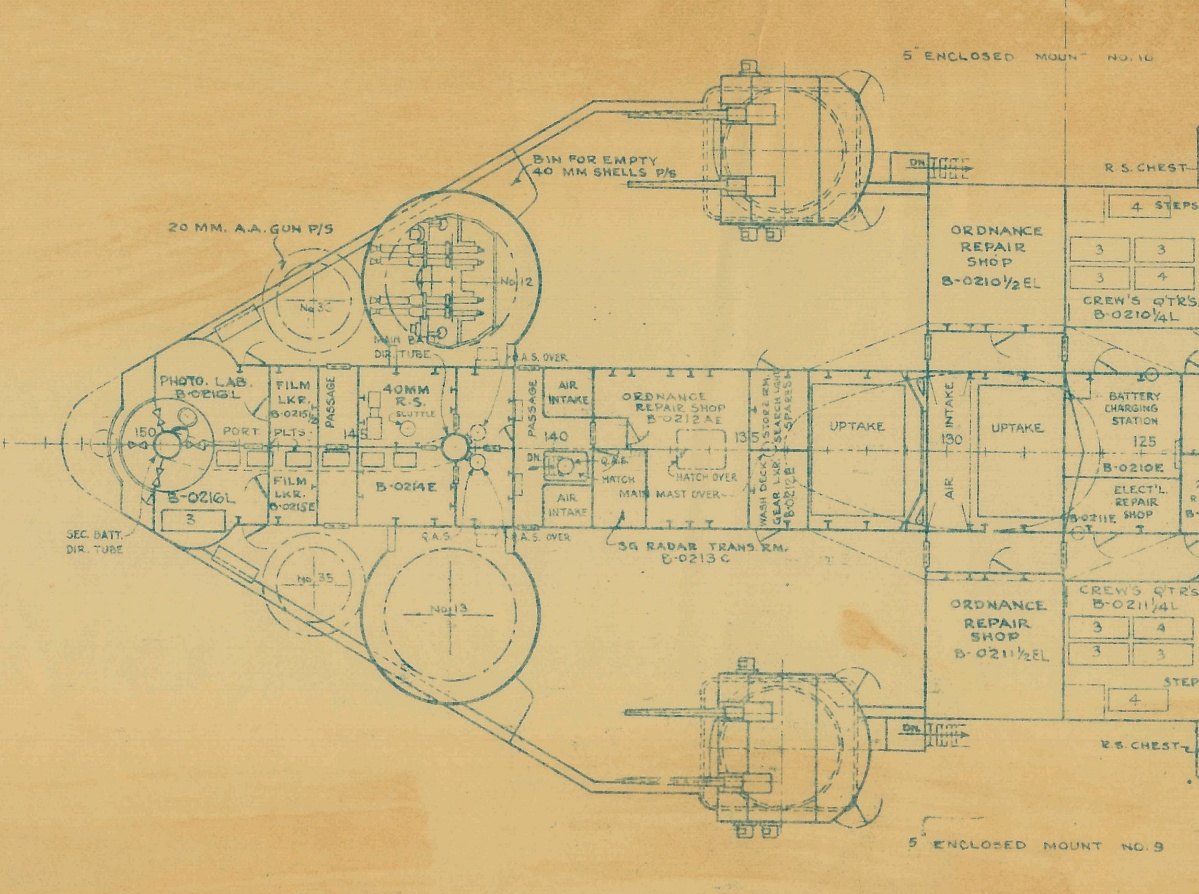
That vantage point, Weidenbach realized, would have allowed ship's photographer Len Schmidt to simply open the door from the photo lab to gain access to the weather deck and a close-up vantage point of the approach of the attacking aircraft.
While poring over the ship's plans, Weidenbach also discovered a second "photo lab" on the 07-level, immediately below the outboard 08-level bridge wing where Campbell and Ferrigno were positioned during the attack.
After communicating with former Navy photographers, members of the National Association of Navy Photographers (NANP), their consensus about that second photo lab, due to its small 9'x16' size, indicated it was more likely to have been a photo equipment gear locker rather than a functioning photo lab.
That would explain how Campbell and Ferrigno could have rushed forward during General Quarters from the aft photo lab and up eight levels to the upper-level bridge while carrying the heavy Fairchild aircraft cameras. If the cameras had instead been stored in that 07-level gear locker, the task would have been much easier to accomplish.
It had become clear by now that rather than one or the other, it was in fact both shipmates that had photographed that dramatic aircraft attack upon Missouri on April 11, 1945. Both men's recounting of what they saw and photographed that day was accurate. It was simply a matter of vantage point and perspective.
It was also clear that Campbell had taken the series of photographs of the approaching aircraft that included the widely published image capturing the instant of impact.
It is worth noting that Campbell was in the right place and right time for another series of historic photographs on September 2, 1945.
As representatives of the signatory nations stepped forward to sign the Instrument of Surrender, "Buster" Campbell had positioned himself overhead in the window of the rangefinder of Missouri's main battery turret #2. He used the 4x5 Graflex RB model D with the attached bag magazine that allowed for 12 exposures. He took photographs of each representative as they stepped to the covered mess table to add their signature to the historic document.
NOTE: Forward main battery turrets # 1 and #2 had been rotated 30 degrees to starboard during the ceremony to provide additional deck space on the veranda deck to provide additional standing room for the attending high-ranking witnesses of the ceremony.
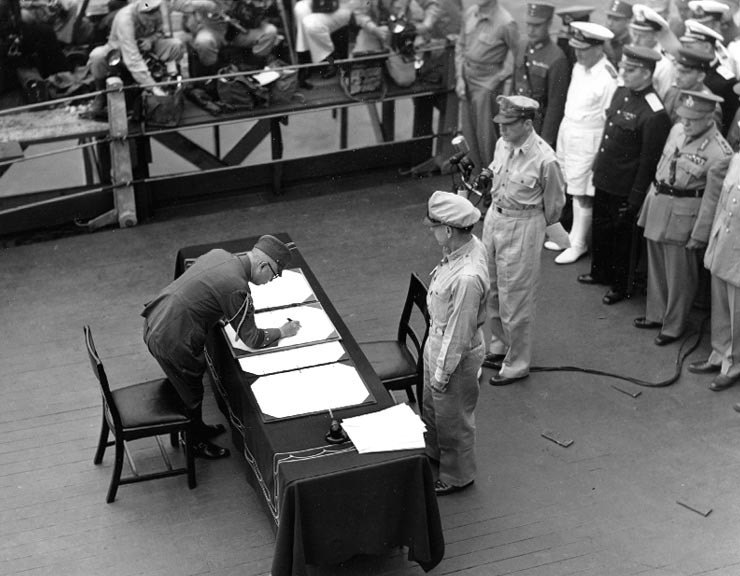
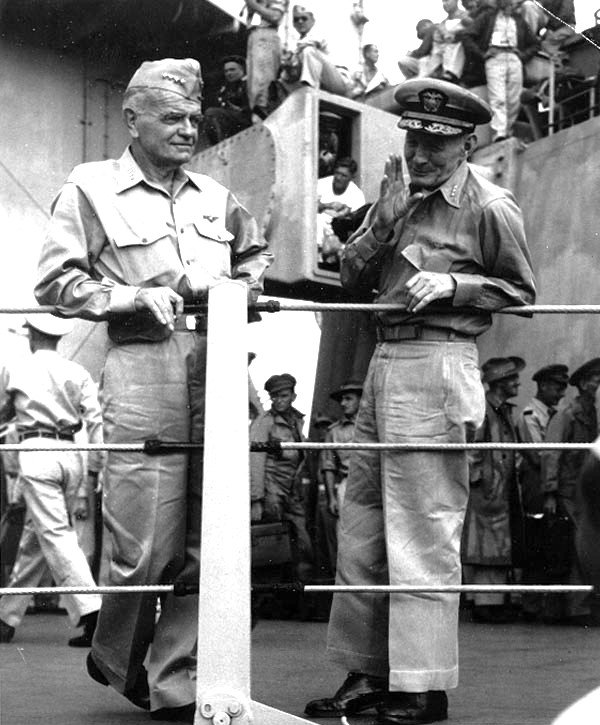
During the Committee's period of research, ship's curator Weidenbach traveled repeatedly to the National Archives II in College Park, Maryland to search for photographic and textual records pertaining to Battleship Missouri, to the April 11th attack and events surrounding the Battle of Okinawa, as well as the broader perspective of World War II in the Pacific, returning with a wealth of scanned image files from NARA II's extensive collection of photographic film prints, as well as paper copies of After-Action Reports, Deck Logs and other textual records.
At the same time, Kensuke Sato returned periodically to Japan to pursue Special Attack Force records pertaining to the attack on Missouri. In particular, he was successful in identifying the base of operations, the squadron involved, the names of the pilots that participated in the attack and transcripts and timing of their in-flight radio communications.
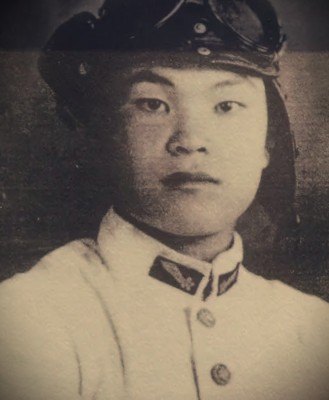
As the committee's search for the identity of the pilot narrowed down to Setsuo Ishino, Sato was also able to locate and visit Takafumi Ishino, the pilot's older brother in Okayama. During his visit, the older Ishino allowed Sato take photographs of two photo portraits of Ishino in uniform and a poignant family portrait with Ishino as a toddler holding a military aircraft model. Sato used his little point and shoot film camera. The scanned reproduction of his snapshot of Ishino in uniform is now widely viewable all over the internet.
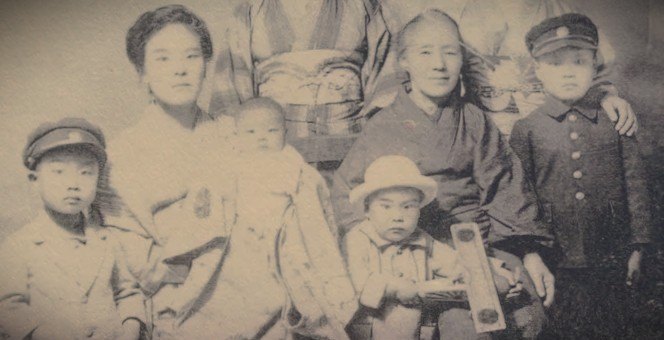
Finally, after seven long years of focused and determined research, the three World War II veterans gathered on the historic "Surrender Deck" of Battleship Missouri where they were awarded for their accomplishments and years of dedicated voluntary service. Soon after, they shared a final farewell luncheon together with Hasebe and Weidenbach before formally retiring their Historic Research Committee.
Camera Notes
The Fairchild's K-20 aircraft camera was designed by Sherman Fairchild's Fairchild Camera and Instrument Company and produced by Folmer Graflex under military contract during World War II. The camera used 5.25" x20' or 200' roll stock that produced an image frame size of 4"x5". The camera's relatively light-weight, rapid through-the-lens shutter speed and automatic cocking film advance lever was ideal for hand-held photography aboard military aircraft and naval vessels.
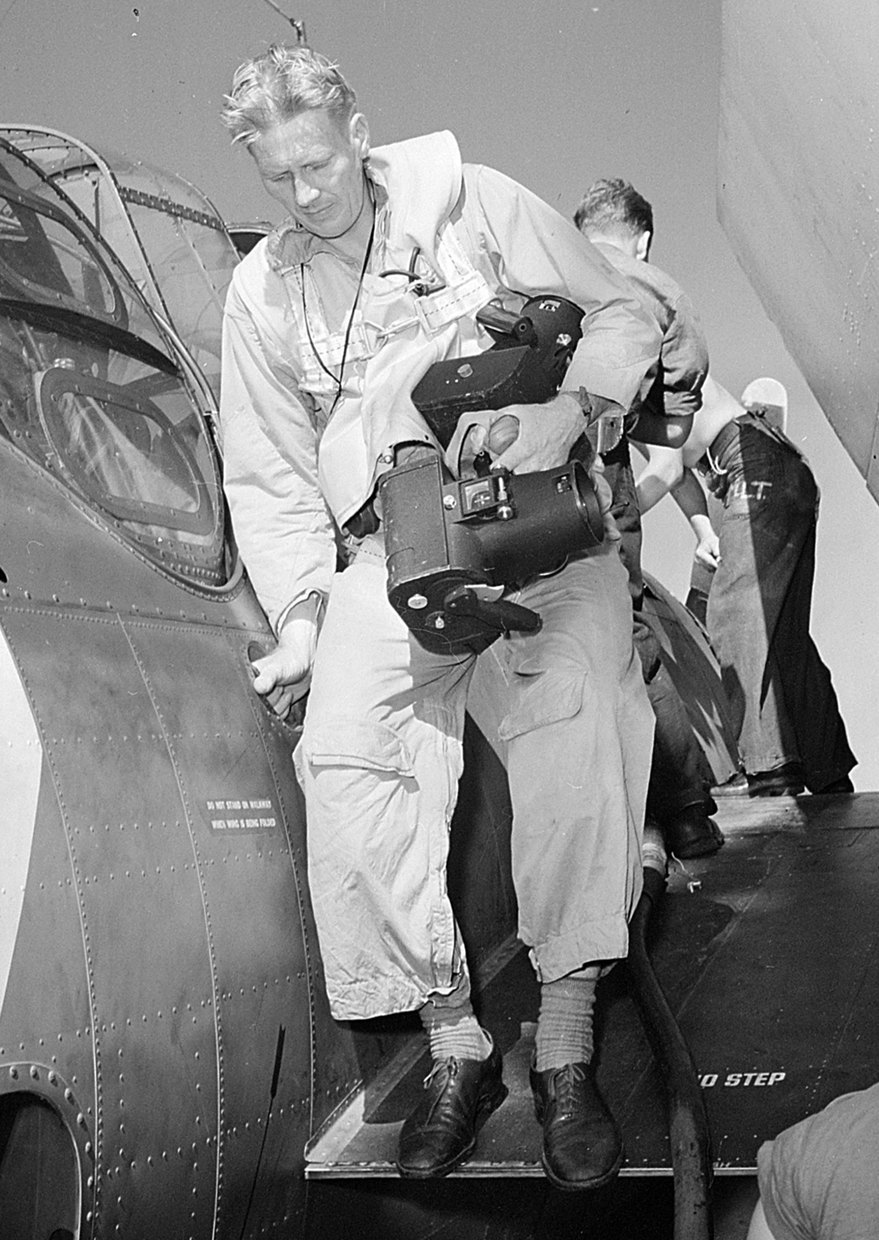
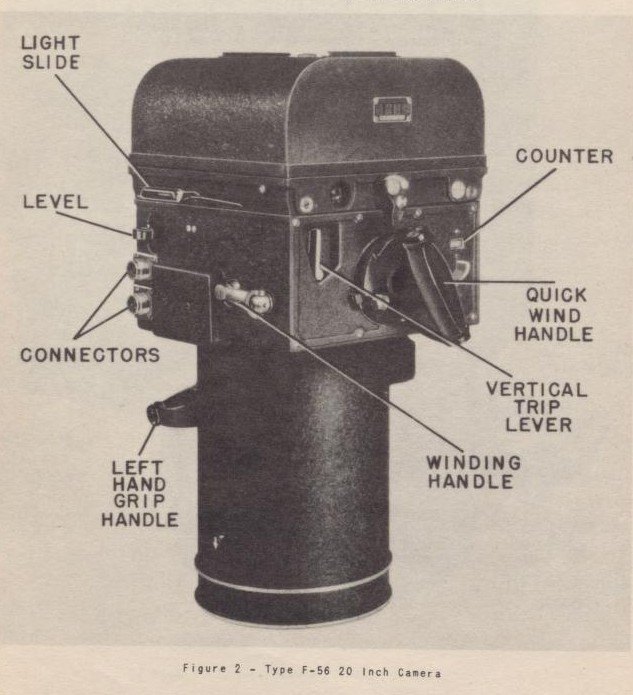
The Fairchild F-56 is a large aircraft camera produced by Fairchild Camera and Instrument Company, designed as a versatile aerial reconnaissance camera for military use during World War II. It features interchangeable lens options with 6 5/8 x 7-inch image format using 7" x 125' roll stock held in an interchangeable magazine.
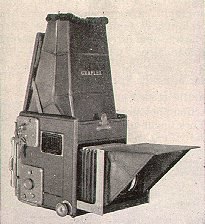
4x5" Graflex RB Series D single-lens reflex camera with a bag magazine in the rear for 12 exposures without reloading. It has a focal plane shutter providing exposures up to 1/1000 second with a ground glass viewing-focusing window normally viewed at waist level that provides an exact, erect image with the same depth-of-field as the image to be recorded on film. The camera is designed to use a sheet film holder or magazine or a six-exposure roll film holder.
***